
Raising Middle Schoolers

My almost thirteen-year-old, who suddenly grew taller than me this Spring…much to my dismay.
This year, I retired after 28 straight years in the public school classroom. I started my teaching career in 1998, teaching middle school. When I started teaching, the internet wasn’t even born—I used a chalkboard and overhead projector to give my students notes! We read actual books and wrote on notebook paper. Over the years, I taught 5th, 6th, and 7th grade Science, Social Studies, and English-Language Arts. Between 1998 and 2026, I saw so much change in education, from curriculum to educational policy to middle school structures to educational technology. I taught through the pandemic, first from home and then in a hybrid classroom. I can truthfully say, I HAVE SEEN IT ALL. But while so much changed about education and our society, one thing remained the same—angsty middle schoolers!
When I got my master's degree in 2003, one of the most beneficial courses I took was about young adolescent development. My initial certification was through a bachelor’s degree in elementary education, which at the time, covered Kindergarten through 8th grade. I got lots of instruction in pedagogy and childhood development. But I was absolutely not prepared to teach middle schoolers! Middle schoolers are a whole different beast. I have often referred to them as overgrown toddlers, because other than the first couple of years of life, the pre-adolescent years are the time when students experience the most growth—physically, hormonally, relationally—so much so that the thinking part of their brains (prefrontal cortex) takes a backseat to everything else going on in their bodies. They trip over their own feet as they grow, their voices change, their skin changes, and phew—they get stinky. (Thank you, whoever invented deodorant.) And it’s why there are so many issues with “executive functioning” skills (like time management, self-monitoring, and emotional regulation) at this age.
Raising middle schoolers takes a lot of patience and understanding from everyone involved, from parents to teachers to grandparents to coaches. I have experience as a teacher, but also as a mom—I am currently raising two boys, almost 11 and 13! One of the things I have done for the last several years in my team’s weekly newsletter is include a little blurb called “Raising Middle Schoolers,” filled with tips to help parents understand some of these things about pre-adolescents so that they can work with their teachers to support their children during this phase of life. See below for a compilation of our best tips on how to support your child through this awkward phase of life!
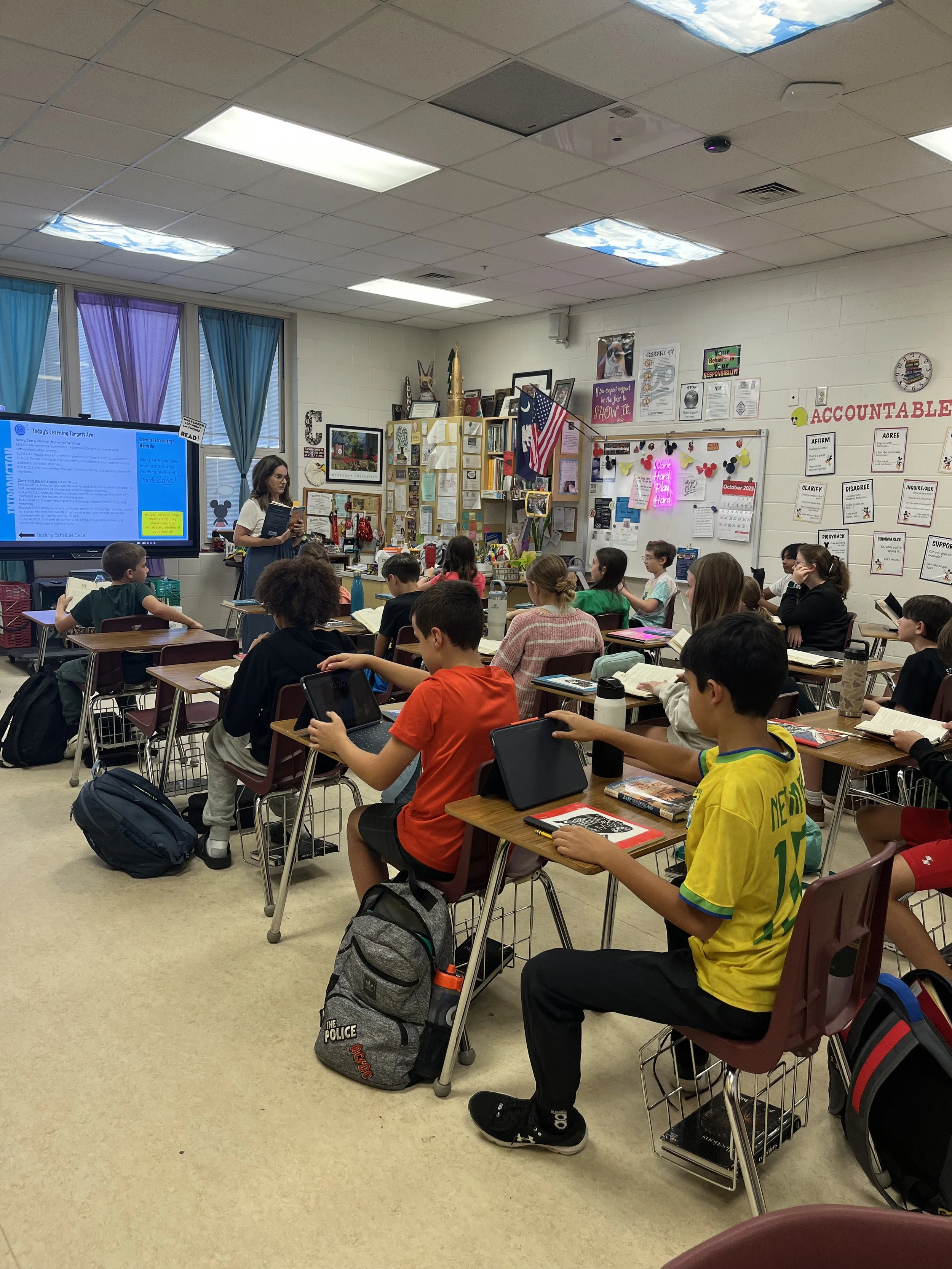
No News is Good News! When students get to middle school, their teachers sometimes have close to 100 students and their work to keep up with. If you aren’t hearing anything from the teacher, chances are things are fine! If you’re curious to know how they’re doing, don’t hesitate to reach out to the teacher(s)!
A big adjustment to middle school is that students are now responsible for accessing their make-up work when they are absent and completing any assignments in a timely manner. Teachers can grant extensions at student/parent request if students are sick and unable to work; otherwise, students are expected to keep up with their assignments by accessing their lessons and assignments through whatever method their teachers post their courses (Canvas, Google Classroom, Planbook, Schoology, etc.).
Middle schoolers typically need 8-9 hours of sleep per night to ready their brains for learning. Staying up late on cell phones and playing video games is the biggest thief of our students’ sleep! Set up a place where children can store and charge their devices outside of their bedrooms.
Homework is often a big adjustment for middle schoolers, especially if they struggle with time management. Having a quiet place to work and consistent time each day to work on homework can help! Sit down with your child and schedule times between other home and extra-curricular obligations so that they know when/where they can work on their homework each day. Homework usually includes reading every night, finishing up work not completed in class, and other review assignments. Homework expectations for 6th graders is approximately 60 minutes (1 hour) per night, for 7th graders, 70 minutes, and 8th graders, 80 minutes. If students are working more than that amount of time on homework, something is wrong.
Do you have access and follow your child’s courses and online grade book so that you can see how they are doing? If not, reach out to the school to find out how! If it is too much for you to manage, you can always have your child show you their assignments and grades at any time on their school devices!
Time management is something many middle schoolers struggle with. Teaching them how to use their time efficiently is a skill teachers work on all year and that you can help support at home! Having a calendar and daily checklist of school and home tasks is a great way to stay organized. Be sure to check the teachers’ online courses for posted assignments each week.
Middle schoolers often think they are masters at multi-tasking. In reality, our brains cannot multi-task, but actually “task-switch,” dividing attention between the tasks we are trying to complete. It often takes MORE time to complete tasks while trying to “multi-task” because our brains have to switch back and forth, often causing loss of focus. (This includes trying to listen to music, especially with words, at the same time we are reading or writing.) So, especially while middle schoolers’ brains are still developing, it’s best for them to do one thing at a time!
Did you know that technology addiction is a recognized behavioral addiction? This can include addiction to video games, social media, checking email and texts, and surfing the internet. Unfortunately, many students struggle with this behavior on a daily basis, and it often gets in the way of education. We have seen a dramatic increase in these concerns since 2020 in the classroom. Our students should be learning to create with technology, not simply consume. For more information, visit https://www.sandstonecare.com/blog/technology-addiction/ Tip: Have a place where students can charge their devices that is outside of their bedrooms. So often students will “sneak” and spend hours gaming, watching YouTube, or scrolling social media on their phones or iPads, and then they don’t get enough sleep!
Beware of AI use too early! Students are legally not allowed to use most AI tools until they are 13 (and most 6th graders are still 11 or 12). But that doesn’t mean they aren’t already using them! Be aware of what your children are doing with AI. Unless a teacher gives students permission to use an AI tool, they should not be using AI to generate anything for any of their assignments. As our students learn and mature, they should be taught how to use AI tools properly and ethically.
So many of our students are plagued by perfectionism in academics and sports, which is evidence of a fixed mindset instead of the growth mindset schools are encouraging. Instead of expecting perfection, encourage your child to do his/her best and praise good efforts. Support them through their failures so that they can learn from their mistakes!
Is your child addicted to YouTube shorts, Instagram Reels, and TikToks? Recent research shows that young brains now have a shorter attention span than a goldfish. This makes teaching and practicing skills that require extended thinking and reading/writing stamina very challenging. Consider limiting your child’s screen time to help them improve their attention spans!
One of the biggest differences between elementary and middle school is how absences are handled. In middle school, students must be responsible to make up any missed assignments. If a child is absent due to illness or for any other reason, students are expected to check with the teachers about assignments that need to be completed. All missing work should usually be completed within 3 days of returning to school, unless extensions are needed for extenuating circumstances. (Be sure to check your school’s policies.)
The primary way teachers communicate with students outside of class is often through email. Take some time to look through your child’s inbox to see what kinds of emails they are receiving and if they are reading them! Teachers give students time to read emails each day at the beginning of homeroom. (It’s also a great way to see if they are getting into any mischief)!
Does your middle schooler seem to be regressing in their behavior and/or learning? Don’t worry--this is normal! There is so much growth during this time of adolescence that sometimes their brains can’t quite juggle all the changes at once. Stay consistent and don’t “let go” of your child yet--they need you now more than ever!
Many states are banning the use of cell phones in schools. This prevents cell phones and other personal electronic devices and accessories from being used by students during the school day. Other personal electronic devices or accessories that are included in this ban are smart watches, game systems, personal tablets, and wireless earbuds. If you need to reach your child during the school day, decide on alternate methods, including email or contacting the school/teacher.
Do your middle schoolers behave like angels with everyone else but like devils when they’re with you, especially if you’re a mom? Unfortunately, that is normal. You are their “safe space.” They may hold things in all day, and then they let out all their frustrations and craziness with you. It isn’t the best feeling for a parent to become a punching bag for their children, but it’s completely normal! Setting consistent boundaries and consequences for behavior at school AND home is the best way to manage this unpleasant part of parenthood.
Prioritizing is a difficult skill for new middle schoolers, one that they are just learning how to do. When they have a list of tasks to complete, they often start with the easiest/most entertaining task, even if they have something more important or time-dependent to complete. Helping them figure out what is most important to do first, second, third, etc. based on due dates is a great way to help them learn how to prioritize!
Are your middle schoolers extremely dramatic and emotional? Don’t worry--this is normal! As students enter adolescence, their bodies, brains, and hormones begin changing dramatically, throwing them for a complete loop. The best thing to do to help your child get through these bumpy years is to remain calm, keep an open line of communication, and when they come home being dramatic, give them space and then talk through the drama with them. You’ll probably find that things aren’t quite as dramatic as they seem!
Are you lowkey shook when you hear your kids talking to each other? Are you left thinking, what the sigma? Is your aesthetic giving basic or full-on cheugy vibes? Are you skibbidi Ohio or do you have mad W rizz? No cap, trying to decode Gen A lingo might have you wanting to ghost your kid, but trust, interpreting their slang is straight bussin’. Who knows, picking up on their vibe might even help you finesse your way to GOAT status, 'cause then you'll have that rizz—just don’t be sus about it! IYKYK. If you need the 411 to keep up with your kid, peep this article about Gen A Slang.
By the time students reach middle school, they should be “owning their own learning.” While teachers can present information in a variety of ways and give multiple opportunities for students to learn information, the students themselves need to realize that they are the agents of their own learning! It’s like the old Chinese proverb: “You can lead a horse to water, but you can’t make him drink.” The teachers can lead the students to knowledge and understanding, but students themselves have choose to take in the knowledge and understanding.
Procrastination is unfortunately a common struggle amongst middle schoolers. Developing time management skills is a challenge as students learn to juggle multiple teachers, classes, and assignments. Often, students will wait until an assignment is due and then panic and start asking for help. Have conversations about how “due date” does not mean “do date.” When an assignment is due, it should be completed and ready to submit before arriving to school. Seeking help and asking questions about projects should be done prior to due dates so that students have time to finish the assignment before submitting.
Have you heard of “popcorn brain?” It is a rather new phenomenon occurring more and more frequently due to excessive screen time and causes difficulties with concentration, following directions, memory, anxiety, and a constant craving for stimulation. (Sound familiar?) Because symptoms are so similar to ADD, many students are being misdiagnosed with ADD when there are other measures that can be taken to prevent these types of mental struggles. To learn more about popcorn brain and ways to prevent it, check out this article: https://www.parents.com/what-is-popcorn-brain-11695794
Did you know that energy drinks are dangerous for adolescents? Energy drinks contain significantly higher levels of caffeine and sugar than regular sodas, coffee, juices, or teas. The American Association of Pediatrics recommends no caffeine for children under 12, and for teens, limiting caffeine intake to 100 mg per day. High levels of caffeine can contribute to high blood pressure and heart rates, and increased sugar can cause a sugar rush and crash that makes kids feel tired and irritable. The combination of caffeine and sugar can also increase hyperactivity and distractibility in some children, which can be particularly problematic for those with ADHD. Plain water is always the best source of hydration for growing brains and bodies!
Remember popcorn brain? Well, there is another new phenomenon called popcorn lungs that is a direct result of vaping. Vaping is becoming more and more of a problem in schools, and it is causing deadly conditions in young people. See this article about a high school cheerleader who was diagnosed after secretly vaping for two years. Her mother shares, ““I would urge parents to spread awareness. This is meant to be a cautionary tale to not let your kids vape no matter what.”
The summer months typically cause a “summer slump,” especially in reading and math skills. To prevent that, students should read every day for at least 20 minutes, and experience math in its “natural state.” Have students help figure out tips when going out to eat, estimate sales taxes when shopping, and plan a meal on a budget!
If you are a middle school teacher and have other pieces of wisdom not shared above, please drop a comment below!

Kimberly Cauble…
…taught middle school in York County, South Carolina for 28 years. She is also is a full-time wedding & portrait photographer in the Charlotte, NC area who has been photographing families, seniors, and weddings since 2012. She has photographed over 100 weddings and loves people, the art of photography, and sharing what she has learned about photography and running a small business with others!
For inquiries, please click here!
For photography education posts, click here!